
The app organizes the data; the cuff creates it
A blood pressure app can turn dozens of readings into averages, charts, reminders, or reports. That organization may help your clinician review what happened between appointments. It does not make the underlying measurements accurate, however. The blood pressure monitor and cuff produce the reading; the app records or displays it.
Your clinician may begin by asking what device you used. The American Heart Association recommends a validated, automatic, cuff-style upper-arm monitor for home use. Wrist and finger devices are generally less reliable, and the 2025 ACC/AHA guideline advises against relying on cuffless devices, including smartwatches, until they demonstrate greater precision and reliability. The FDA also warns against unauthorized wearable features that claim to measure blood pressure because inaccurate results could affect care decisions.
A clinician may ask you to bring your monitor to an appointment. That allows the care team to check the cuff size, watch your technique, and compare the monitor with office equipment. They may also inspect whether readings were entered manually, transferred directly from the device, or edited after syncing.
The goal is not to reject technology. It is to determine whether the graph represents dependable measurements. If the cuff is unsuitable or the technique is inconsistent, a polished average may create false confidence. Once the measurement process looks credible, the app becomes much more useful as an organized record.
- Use a validated automatic upper-arm monitor.
- Confirm that the cuff fits your arm.
- Bring the monitor to an appointment if requested.
A useful blood pressure record includes more than two numbers.
Technique determines whether the record is trustworthy
Small differences in preparation and position can change a blood pressure reading. Before interpreting your app history, a clinician may ask how you measured. Current CDC and AHA guidance calls for at least five minutes of quiet seated rest, back support, feet flat on the floor, uncrossed legs, and no talking during the measurement. The cuff belongs on bare skin, with the arm supported so the cuff is at heart or chest level.
The AHA advises avoiding smoking, caffeine, and exercise for 30 minutes beforehand and emptying your bladder. The CDC also notes that recent alcohol, food or drink, activity, nervousness, and body position can affect a reading. Measuring under similar conditions makes readings easier to compare.
The AHA recommends taking two readings one minute apart each time you measure and recording both. Your clinician should tell you when, how often, and for how long to monitor because the useful schedule depends on why the data are being collected. A plan for checking a new concern may differ from ongoing monitoring of established hypertension.
Do not delete an unexpected result simply because it disrupts the graph. Record the repeat measurement and any obvious issue, such as talking, moving, using the wrong cuff position, or measuring immediately after activity. Your clinician can then decide whether a reading is informative, questionable, or worth repeating under standardized conditions. Consistency—not visual perfection—is what makes the record clinically useful.
- Rest quietly for at least five minutes.
- Keep your back supported, feet flat, and arm supported.
- Record both readings when taking a repeated pair.
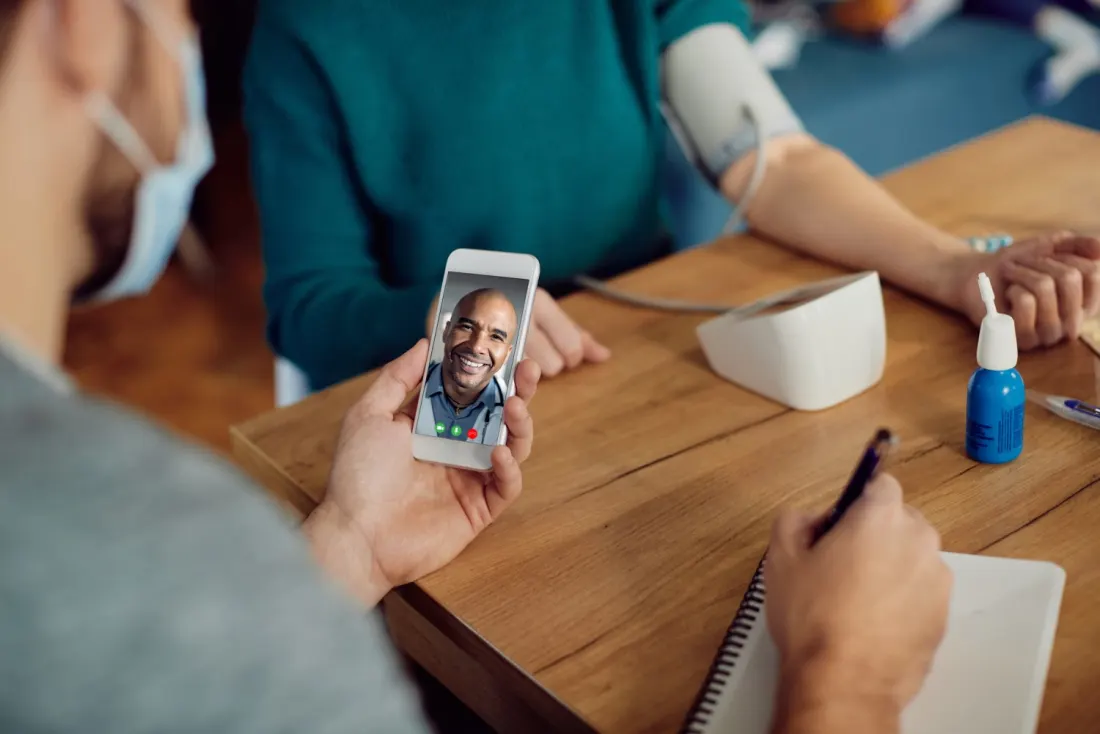
Clinicians look for patterns, not just the highest number
Blood pressure changes throughout the day, so one reading is a snapshot rather than a diagnosis. A clinician may calculate an average, compare morning and evening measurements, review variability across days, and examine whether elevated readings repeat under similar conditions. The 2025 ACC/AHA guideline describes home monitoring over days to weeks as a way to estimate average blood pressure and compare daytime or evening patterns.
They may also compare your home results with office measurements. Readings that are high in the office but lower outside it can suggest a possible white-coat pattern. The reverse—a normal office reading with higher readings at home—can suggest a possible masked pattern. These differences require clinical evaluation; an app cannot label or diagnose either condition. The USPSTF recommends validated out-of-office measurements, using home or ambulatory monitoring, to confirm hypertension after an elevated office screening result and before treatment begins.
For reference, current ACC/AHA categories classify normal blood pressure as below 120 systolic and below 80 diastolic. Elevated is 120–129 systolic and below 80 diastolic. Stage 1 hypertension is 130–139 systolic or 80–89 diastolic, while stage 2 is 140 or higher systolic or 90 or higher diastolic. If the two numbers fall into different categories, the higher category applies.
These categories provide clinical context, but they do not establish your personal treatment target. Your clinician considers repeated measurements, medical history, cardiovascular risk, symptoms, medications, and other clinical findings.
- Averages usually reveal more than one isolated result.
- Home and office readings can provide different information.
- Only a qualified clinician can confirm a diagnosis.
Context helps explain what the chart cannot show
A useful blood pressure record includes more than two numbers. Your clinician may want the date and time, whether a result was the first or second reading, and when you took prescribed medications. Note missed doses or recent clinician-directed changes honestly. Do not skip, delay, or reschedule medication to produce a more attractive graph.
Relevant circumstances can include recent exercise, caffeine, alcohol, smoking, illness, pain, poor sleep, or unusual stress. These notes do not prove that a particular event caused a change in blood pressure. They help your clinician identify questions, decide whether measurements were comparable, and determine whether a pattern deserves closer evaluation.
Symptoms and their timing can also matter. Record what you felt, when it began, and whether it occurred before, during, or after the measurement. High blood pressure commonly has no warning signs, according to the CDC, so feeling well does not establish that your pressure is normal. Conversely, symptoms such as dizziness or headache do not establish that blood pressure caused them. Your clinician has to consider other possible explanations.
If you are losing weight or using a prescribed GLP-1 medication, include it in the complete medication and health history you share with your clinician. Mention recent clinician-directed medication changes and substantial changes in weight or eating patterns when asked. The app record is one part of that larger clinical picture; it cannot replace medication review, an examination, laboratory testing, or professional judgment.
- Log medication timing without changing the prescribed schedule.
- Add brief notes about unusual measurement conditions.
- Record symptoms and when they occurred.
Urgent readings require a plan outside the app
An app notification is not an emergency service, and routine clinician review may not happen immediately. Ask your care team in advance what readings should prompt a repeat measurement, a call to the office, or emergency care. Follow any personalized plan they have given you.
The AHA advises that if your blood pressure is suddenly higher than 180/120 mm Hg, wait at least one minute and measure again. If the repeat remains that high and you do not have emergency symptoms, contact a health care professional immediately. Do not use an app average to dilute or dismiss a severely elevated current reading.
Call 911 when a reading higher than 180/120 mm Hg occurs with symptoms such as chest pain, shortness of breath, back pain, numbness, weakness, a change in vision, or difficulty speaking. Do not wait for the number to fall, for the app to generate an alert, or for a routine portal response. If you have concerning symptoms but cannot obtain a reliable measurement, seek emergency help based on the symptoms rather than waiting for the app.
At the same time, one reading that is higher than your usual level is not automatically an emergency. The AHA recommends repeating an unexpectedly high reading and recording both results. Technique errors, recent activity, or other circumstances may be relevant, but only a clinician can determine what the result means. A clear action plan prevents both complacency and unnecessary alarm.
- Repeat a suddenly severe reading after at least one minute.
- Call 911 for a reading above 180/120 mm Hg with emergency symptoms.
- Do not wait for an app response during a possible emergency.
Prepare a record your care team can actually use
Before your appointment, ask how the office wants to receive home readings. Some clinicians may prefer a printed summary, a portal upload, a spreadsheet, or readings stored in the monitor itself. A concise report should preserve dates, times, systolic and diastolic values, repeated readings, and relevant notes. Bring the original device or its stored history if requested so the clinician can examine the source data.
Do not rely only on the app’s overall average. An unexplained average may hide missing days, inconsistent measurement times, or a small number of unusual readings. Keep the underlying measurements available, and ask which date range the clinician wants reviewed. Also ask what personal range matters to your care, how long to keep monitoring, and what should trigger a call.
Review the app’s practical limitations before depending on it. Confirm that you can export a readable record and determine whether exporting requires a subscription. Check whether data are stored locally or in the cloud, whether an account is required, and whether you can correct errors without erasing the original history.
Privacy deserves separate attention. HHS explains that HIPAA generally does not protect information entered into a personal health app unless the app is provided by, or operates for, a covered health care entity or its business associate. Review the app’s current privacy policy, sharing practices, permissions, retention rules, and deletion options. Use the secure sharing method recommended by your clinician’s office rather than sending sensitive health information through an unapproved channel.
- Ask the office which file format or sharing method it accepts.
- Preserve individual readings instead of sharing only an average.
- Review current privacy, export, retention, and deletion terms.
Common questions
Can my clinician diagnose high blood pressure from my app average?
Not from the app average alone. A clinician may use validated home readings as part of confirmation and management, but they also consider measurement quality, repeated results, office or ambulatory readings, medical history, medications, symptoms, and other clinical findings.
Should I share every reading or only the unusual ones?
Keep the complete record unless your clinician requests a specific summary. A series of properly collected readings allows them to review averages and patterns, while selected high or low results can create a misleading picture. Include repeats and brief notes about unusual circumstances.
Are smartwatch blood pressure readings useful for clinical review?
Do not assume that a cuffless smartwatch feature is accurate enough for clinical decisions. The 2025 ACC/AHA guideline advises against relying on cuffless devices until they show greater precision and reliability, and the FDA warns against unauthorized wearable blood pressure features. Ask your clinician which validated upper-arm device to use.
This information is for general education and does not provide medical advice, diagnosis, or treatment. Contact a licensed clinician about your readings and care plan, and call 911 for possible emergency symptoms.