
Why restaurant sodium can be hard to see
Skipping the salt shaker does not make a restaurant meal low in sodium. Sodium may already be in the bread, cheese, broth, dressing, sauce, pickles, cured meat, seasoning blend, or protein before the plate reaches you. A sandwich, for example, can combine a seasoned filling, cheese, condiments, pickled toppings, and a bun. A salad can collect sodium from dressing, cheese, croutons, olives, or cured meat. Soup starts with its broth, then may add noodles, meat, cheese, or garnishes.
The Centers for Disease Control and Prevention says most sodium in the U.S. diet comes from processed and restaurant foods. It also notes that sodium appears across many food categories and that too much can increase blood pressure. That is why taste is an imperfect detector: a food does not need to taste intensely salty to contribute meaningful sodium, especially when several ingredients are layered together.
Portion size adds another surprise. If nutrition data describe one serving but you eat more than that amount, the sodium rises with the portion. The useful question is not whether a dish is “good” or “bad.” It is where the sodium is coming from across the whole order, including the entrée, sides, sauces, and add-ons. Seeing the meal as a set of parts gives you more ways to adjust it.
- Look for sodium across the whole plate, not only in the main ingredient.
- Treat taste as a clue—not a measurement.
- Check whether the listed serving matches the amount you expect to eat.
After scanning and simplifying, shift the side and contain the portion.
Scan first, then simplify the meal
Use a simple two-step start: scan, then simplify. Scan the nutrition information when it exists, and scan the description for likely sodium contributors. Look beyond the main ingredient. “Grilled chicken” may still be brined, pre-seasoned, or served with cheese and sauce. A bowl may combine seasoned rice, beans, meat, salsa, cheese, and dressing. Identifying the biggest layers is more useful than trying to remove every trace of sodium.
Then simplify one or two layers. The FDA and American Heart Association both suggest requesting sauces and dressings on the side and asking whether a meal can be prepared without added salt. You might leave off pickles, bacon, cheese, or a salty garnish when that change still leaves a meal you will enjoy. These requests can reduce what is added during preparation or how much sauce you use.
“No added salt” has limits. It cannot remove sodium that is already in bread, cheese, cured foods, bottled sauces, broth, or a pre-seasoned protein. It also does not guarantee a specific sodium number. If you need a defined limit for a medical reason, ask for nutrition information and discuss workable restaurant strategies with your clinician or a registered dietitian.
Aim for a repeatable adjustment, not a perfect order. If you eat out often, a default such as “dressing on the side” or “skip one salty add-on” requires less decision-making than rebuilding every meal. Consistency across many meals is the practical goal.
- Identify the largest likely sodium sources first.
- Request sauces, dressings, and gravies on the side.
- Remember that “no added salt” cannot change pre-made ingredients.
Shift the side and manage the portion
After scanning and simplifying, shift the side and contain the portion. Fruit, plain vegetables, or a simply prepared side salad may contribute less sodium than fries, chips, soup, or a heavily seasoned side, but the preparation still matters. Vegetables cooked with sauce, seasoning blends, cheese, or cured meat are not automatically lower in sodium. Ask what is added, and request sauces or dressings separately when possible.
Portion changes are another direct lever. FDA dining guidance suggests choosing a smaller size, splitting an entrée, or taking part home. Less of the same food generally means less of its sodium, provided you are truly reducing the amount eaten. Boxing half is not a moral rule and does not make the other half “earned”; it is simply a way to manage a restaurant portion that is larger than you want.
This distinction matters if you use a GLP-1 medication. Reduced appetite or earlier fullness may lead you to eat less, but a small amount of a sodium-dense meal can still contain substantial sodium. Ingredients and preparation still count. Do not change a GLP-1 or blood-pressure medication because of a meal or a single blood-pressure reading; medication decisions belong with the licensed clinician managing your care.
A workable restaurant order does not need to be the lowest-sodium item available. It needs to fit your broader plan, your preferences, and any individualized guidance you have received. One or two meaningful changes are often easier to repeat than a long list of special requests.
- Ask how vegetable sides are seasoned or sauced.
- Choose a smaller order, split the entrée, or save part for later.
- Do not assume that a smaller GLP-1-sized meal is automatically low in sodium.
Put one meal inside your broader eating pattern
One restaurant meal does not define your cardiovascular health. Your usual eating pattern matters, especially if restaurant food appears frequently in your week. The National Heart, Lung, and Blood Institute describes DASH—Dietary Approaches to Stop Hypertension—as a flexible eating plan centered on vegetables, fruits, whole grains, beans, nuts, fish, poultry, vegetable oils, and fat-free or low-fat dairy, while keeping sodium lower.
Current NHLBI DASH materials use sodium limits of 2,300 milligrams or 1,500 milligrams per day. Those are established DASH levels, not a signal that everyone must choose the lower number. Your appropriate target may depend on your medical history and clinician’s advice. The practical restaurant lesson is to build more of the plate from minimally processed foods and to notice where sauces, seasonings, cheese, cured foods, and large portions change the sodium picture.
Zooming out also prevents all-or-nothing thinking. If lunch is sodium-heavy, you do not need to skip food or punish yourself. Return to your normal eating plan and use the information for the next order. If you dine out regularly, choose two defaults you can maintain—for example, checking sodium before ordering at chains and choosing dressing on the side.
Patterns are easier to learn when you keep simple notes. You might record the restaurant, dish, major modifications, and how much you ate. If you also monitor blood pressure, avoid assuming that one meal caused one number. Blood pressure changes throughout the day, and diagnosis depends on more than a single reading.
- Use DASH as an overall eating pattern, not a restaurant perfection test.
- Follow your clinician’s guidance if you have an individualized sodium limit.
- Choose two practical defaults you can repeat when eating out.
Track blood pressure accurately—and know when to get help
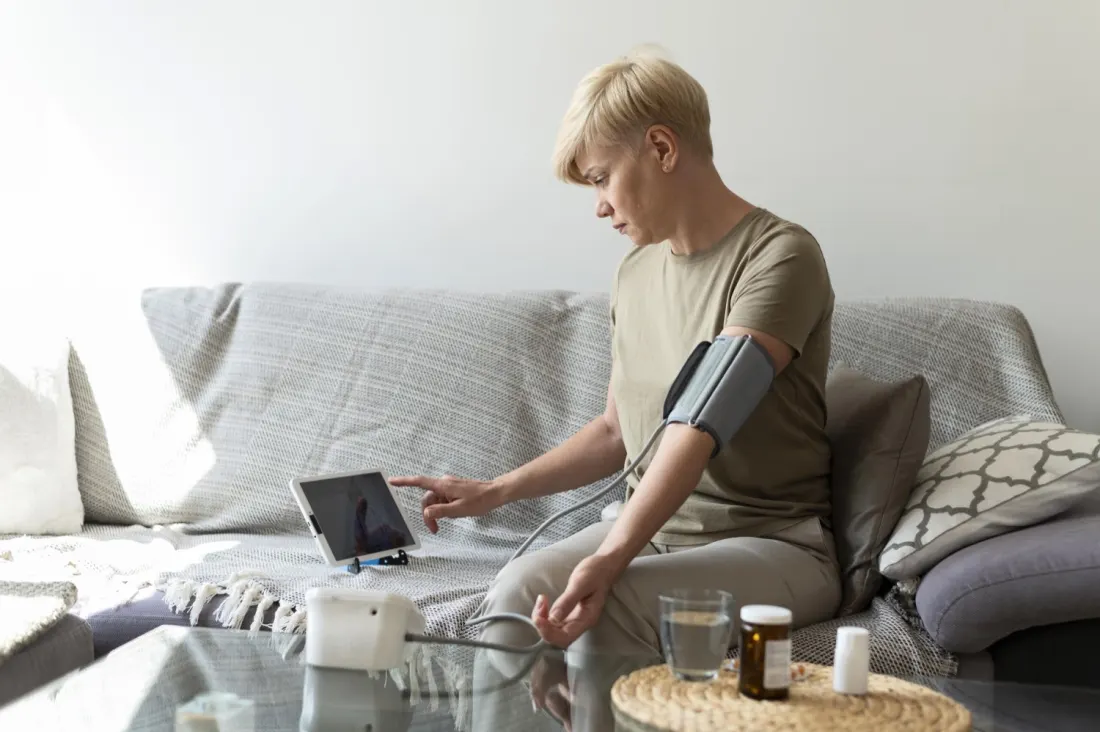
If your clinician has asked you to monitor blood pressure at home, use a consistent method. The American Heart Association recommends an automatic, validated upper-arm monitor with a cuff that fits. Sit with your back supported and feet flat, rest quietly for at least five minutes, place the cuff on bare skin, support your arm at heart level, and avoid talking during the reading. Follow your device instructions and your clinician’s schedule. ValidateBP maintains a list of devices independently reviewed for clinical accuracy.
Record readings rather than trying to interpret one number in isolation. Useful context can include the time, symptoms, medication timing, caffeine, exercise, sleep, stress, and anything unusual, such as a restaurant meal. That context may help your clinician see patterns, but it does not prove that sodium from one meal caused a particular reading. Do not stop or change blood-pressure medication based on a home result unless your clinician has given you specific instructions.
For orientation, current AHA categories define normal as below 120 systolic and below 80 diastolic; elevated as 120–129 systolic and below 80 diastolic; stage 1 hypertension as 130–139 systolic or 80–89 diastolic; and stage 2 as 140 or higher systolic or 90 or higher diastolic. Only a licensed clinician can confirm a diagnosis.
If a reading is higher than 180/120, wait at least one minute and measure again. If it remains that high, contact a health professional immediately. If it is higher than 180/120 with chest pain, shortness of breath, back pain, numbness, weakness, vision change, or difficulty speaking, call 911.
- Use a validated upper-arm device with the correct cuff size.
- Keep technique consistent and record relevant context.
- Treat higher than 180/120 with concerning symptoms as a medical emergency.
Common questions
Does asking for “no added salt” make a restaurant meal low in sodium?
Not necessarily. The request may reduce salt added during cooking, but it cannot remove sodium already present in bread, cheese, broth, cured foods, bottled sauces, or pre-seasoned ingredients. Ask for nutrition information when you need an actual sodium number.
How can I compare meals when the restaurant does not publish sodium information?
Look for likely contributors such as broth, sauces, dressings, cheese, pickled or brined ingredients, cured or smoked meat, and large portions. Ask about preparation, request sauces on the side, and compare dishes by how many sodium-heavy layers they appear to contain. These clues help with comparison but cannot provide an exact amount.
What if my blood pressure is high after a restaurant meal?
Do not assume the meal caused the result or change medication on your own. Repeat the measurement using correct technique and follow your clinician’s plan. If it remains higher than 180/120, contact a health professional immediately; if that reading occurs with chest pain, shortness of breath, back pain, numbness, weakness, vision change, or difficulty speaking, call 911.
This information is for education only and is not medical advice, diagnosis, or treatment. Consult a licensed clinician before changing your diet, medications, supplements, exercise, or blood-pressure care.