
What a smartwatch blood-pressure number represents
A number on your watch can look as definite as a reading from a clinic monitor, but the two may be produced differently. A conventional upper-arm monitor uses an inflatable cuff. Many watch and other cuffless systems estimate blood pressure indirectly from optical or force signals, sometimes combined with timing information and an algorithm. Some outputs are best understood as changes relative to a calibration point, not a fresh direct measurement of pressure. The American Heart Association says the accuracy and clinical usefulness of cuffless devices remain uncertain and recommends against using them to diagnose or manage high blood pressure until they show greater precision and reliability. [1]
Separate the measurement from the app around it. A graph, reminder, export button, or polished “insight” can help you organize information, but none proves that the underlying number is accurate. The important questions are how the exact device creates the estimate, whether it needs calibration, how it performs after calibration and during normal daily use, and whether it has been independently tested for its intended population.
That does not make every watch reading meaningless. A wearable may help you notice that readings seem different at certain times or remind you to check with a conventional monitor. Treat the result as context that may prompt a better measurement, not as a diagnosis, an all-clear signal, or a reason to change treatment.
- Cuffless watches generally estimate blood pressure indirectly. [1]
- App features do not establish measurement accuracy.
- Use watch data as context, not diagnostic certainty.
For home decisions, build your record around a validated automatic upper-arm cuff unless your clinician recommends another setup.
Availability, FDA authorization, and validation are different
“Available,” “authorized,” and “validated” answer different questions. Available means the feature works with your particular watch, phone, software, country, and account. FDA authorization concerns whether a device has been evaluated for lawful marketing for its stated use. Independent clinical validation concerns whether the exact model has met specified accuracy-testing criteria. One label does not automatically establish the others. The FDA advises consumers to avoid unauthorized blood-pressure devices and to search its 510(k) database by device name. The AHA also notes that regulatory clearance alone does not guarantee accuracy under a standardized validation protocol. [1,3]
For a practical validation check, search the exact model—not just the brand—on ValidateBP. Its U.S. listing uses an independent review process and criteria that include active FDA clearance, independent testing under an accepted protocol, and appropriate cuff sizes. If a model is absent, do not conclude that every reading is wrong: ValidateBP says it may not have been submitted or its review may still be underway. Absence does mean you have not confirmed that it met that listing’s criteria. [4,5]
Also ask whom and what was tested. A device’s evidence may not cover pregnancy, children, all body sizes, every skin tone, or every health condition. Check the intended population and limitations in the manufacturer’s instructions, then tell your clinician when shared readings came from a cuffless wearable. [1,2]
- Search by exact device model, not brand alone. [4]
- FDA authorization and independent validation are separate checks. [1,3]
- A missing ValidateBP listing may reflect no submission or a pending review. [5]
Why calibration helps but does not settle accuracy
Calibration gives an estimating system a reference point; it does not convert a watch into an upper-arm cuff. Its quality depends on the reference monitor, cuff fit, your technique, and whether recalibration occurs on schedule. The AHA also flags motion, sensor placement, posture, arm position, and time since calibration as factors that can affect cuffless results in real life. Testing performed soon after calibration while someone sits still may not show how the device performs weeks later during ordinary use. [1]
Samsung’s current U.S. instructions show how specific these requirements can be. For compatible Galaxy setups, the blood-pressure feature requires a separate upper-arm cuff for initial calibration and recalibration every 28 days. Calibration uses three cuff measurements within 30 minutes. Samsung says the watch should be worn snugly on the same wrist, and you should remain still and avoid talking during measurement. The company also states that the feature is not intended to diagnose, treat, or prevent disease. Compatibility currently depends on supported watch and phone software, and Samsung’s U.S. rollout applies to Galaxy Watch4 and later models, excluding Galaxy Fit. [6,7]
Follow the instructions for your exact model rather than transferring Samsung’s schedule to another brand. If calibration is overdue, your watch fit has changed, or the reference cuff reading was poorly taken, pause before interpreting the estimate.
- Calibration anchors an estimate to a cuff reading. [1]
- Calibration quality and timing can affect later results. [1]
- Samsung currently requires recalibration every 28 days for compatible setups. [6]
Build a dependable upper-arm reference
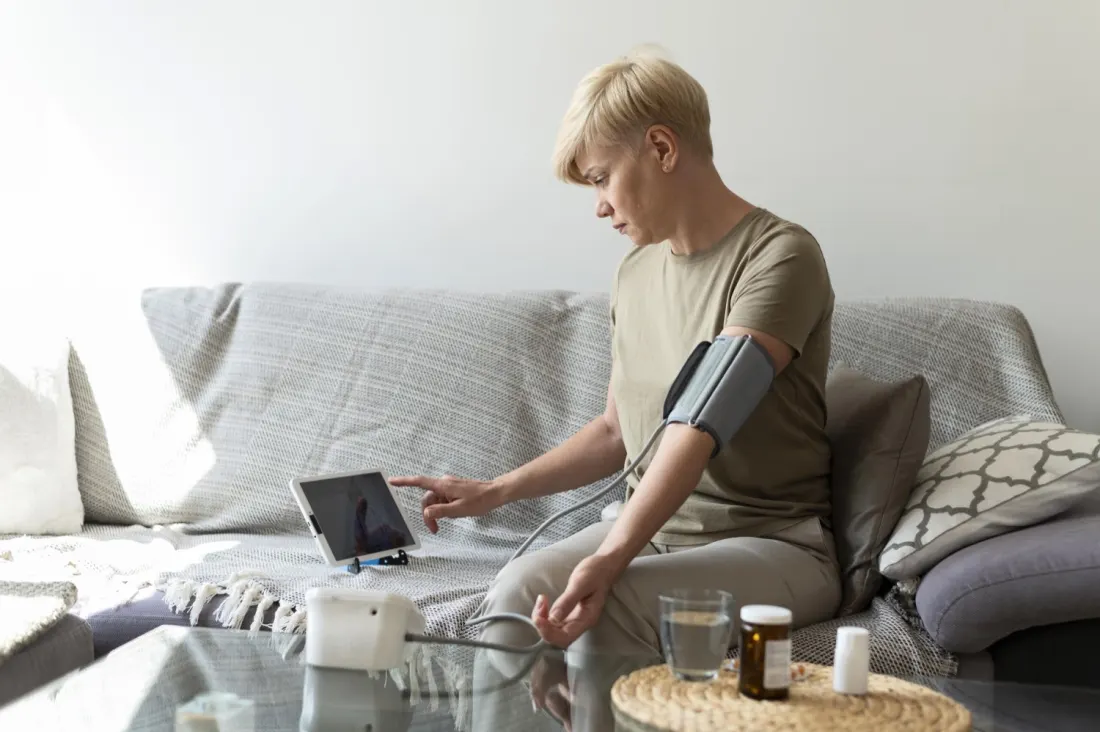
For home decisions, build your record around a validated automatic upper-arm cuff unless your clinician recommends another setup. The American Heart Association prefers this type because wrist and finger monitors are generally less reliable. A validated wrist-cuff device may be appropriate in certain circumstances, such as when an upper-arm cuff cannot fit, but wrist position and technique become especially important. Choose a cuff that matches your measured upper-arm circumference; the wrong size can distort the reading. [2,4]
Technique matters every time. During the 30 minutes before a routine measurement, avoid smoking, caffeine, and exercise, and empty your bladder. Put the cuff on bare skin. Sit quietly for at least five minutes with your back supported, feet flat, legs uncrossed, and arm supported so the cuff is at heart level. Do not talk, text, or move while the monitor runs. Take two readings one minute apart and record both. When comparing trends, use similar times and conditions while following the schedule your clinician has given you. [2]
Bring your monitor to an appointment so a clinician can review your cuff fit, technique, and how its readings compare with office equipment. Good technique cannot prove an unvalidated watch is accurate, but poor technique can make a validated cuff less useful. [2]
- Use a validated automatic upper-arm monitor for routine home measurement. [2]
- Match the cuff to your upper-arm circumference. [2]
- Rest five minutes and take two readings one minute apart. [2]
Understand the categories without diagnosing yourself
The top number is systolic pressure, measured when the heart contracts; the bottom number is diastolic pressure, measured between beats. Under current ACC/AHA categories used by the AHA, normal is below 120 and below 80 mm Hg. Elevated is 120–129 and below 80. Stage 1 hypertension is 130–139 or 80–89, and stage 2 is 140 or higher or 90 or higher. If the two numbers fall into different categories, the higher category applies. Readings higher than 180 and/or higher than 120 are in the severe range. [2]
These cutoffs classify a properly obtained reading; they do not make a smartwatch a diagnostic device. Blood pressure changes through the day, and one measurement is a snapshot. CDC describes hypertension as blood pressure that is consistently at or above 130/80, and a health care professional confirms the diagnosis and interprets readings alongside your medical context. [8]
Look for a pattern from repeatable measurements rather than reacting to every rise or dip. Label the source in your record—watch estimate, validated home cuff, pharmacy kiosk, or clinic—because those numbers are not automatically interchangeable. Note useful context such as time, symptoms, recent activity, and whether the watch was within its calibration period. A clear, modest log is often more interpretable than a dense graph of unexplained readings.
- Normal: below 120/80 mm Hg. [2]
- Stage 1: 130–139 systolic or 80–89 diastolic; stage 2: at least 140 or 90. [2]
- A clinician confirms hypertension using more than one isolated watch estimate. [2,8]
Respond safely to surprising readings
If a watch result surprises you, first consider the situation. Were you moving, talking, cold, stressed, or outside the device’s instructions? If you feel well, sit correctly and recheck with a validated upper-arm monitor. Record the watch estimate and cuff reading separately; do not average them as though they were equivalent. If unexpected results repeat, share the pattern, exact device model, and your technique with a licensed clinician. Do not change blood-pressure medicine, a GLP-1 medicine, supplements, diet, or exercise because of one watch estimate. [1,2]
Know the urgent exception. If a properly repeated cuff reading remains higher than 180/120 mm Hg without concerning symptoms, the AHA says to contact a health care professional immediately. If a reading is higher than 180/120 and you have chest pain, shortness of breath, back pain, numbness, weakness, a vision change, or difficulty speaking, call 911. Do not wait for the watch to reassure you. Concerning symptoms deserve appropriate care even when a wearable shows a normal-looking number. [2]
Finally, make the data understandable and controllable. Check whether the app identifies the device source, calibration status, and measurement time; whether you can export a readable report; and how your information is stored, shared, or deleted. More data is helpful only when you and your clinician can tell what it represents and how dependable it is. [1]
- Confirm an unexpected watch estimate with a validated upper-arm cuff.
- Keep readings from different device types labeled separately.
- Call 911 for a reading above 180/120 with emergency symptoms. [2]
Common questions
Can a smartwatch replace my home blood-pressure cuff?
Not for diagnosis or treatment decisions under current AHA guidance. A cuffless watch may provide contextual or trend information, but readings used for clinical decisions should come from an appropriate validated device, usually an automatic upper-arm monitor. [1,2]
Why does a smartwatch need calibration with a cuff?
Many cuffless systems estimate change relative to a reference point. Calibration supplies that reference, so errors in the cuff, cuff size, technique, or calibration timing can affect later estimates. Follow the instructions for your exact model. [1]
What if my watch and upper-arm cuff disagree?
Check the cuff size and your position, rest quietly, and repeat the upper-arm measurements as instructed. Record each device separately rather than averaging the results. Share repeated disagreements with a clinician, including the exact models and whether the watch was properly calibrated. [1,2]
This content is for general education only and is not medical advice, diagnosis, or treatment guidance. Consult a licensed clinician about unexpected readings, symptoms, or changes to medications and blood-pressure care.