
What the two blood pressure numbers measure
A blood pressure reading describes the force of blood against your artery walls at two points in each heartbeat. The first, or top, number is systolic pressure. It captures the pressure while your heart contracts and sends blood into the arteries. The second, or bottom, number is diastolic pressure. It captures the pressure while your heart relaxes and fills between beats. Because the pumping phase usually creates more pressure, systolic is normally the larger number. NHLBI and the American Heart Association use these definitions.
The unit is millimeters of mercury, shortened to mm Hg. The name comes from older pressure gauges that used a mercury column; modern digital monitors still report results in the same unit. A reading written as 118/76 mm Hg means a systolic pressure of 118 and a diastolic pressure of 76.
Your pulse is different. Pulse is the number of heartbeats per minute; blood pressure is the pressure of blood moving through your vessels. A monitor may display both, but they are separate measurements, according to the AHA’s heart-rate guidance.
Think of the numbers as two frames from one repeating cycle: squeeze, then relax. Neither is a score competing with the other, and you do not combine them into a simple average when identifying a blood pressure category.
- Systolic: pressure while your heart contracts.
- Diastolic: pressure while your heart relaxes between beats.
- Pulse: heartbeats per minute, not arterial pressure.
Start with an automatic, validated monitor that uses an upper-arm cuff.
How to read the categories when the numbers disagree
For nonpregnant adults, current ACC/AHA categories are based on whichever number places the reading in the higher category. Normal is below 120 systolic and below 80 diastolic. Elevated is 120–129 systolic and still below 80 diastolic. Stage 1 hypertension is 130–139 systolic or 80–89 diastolic. Stage 2 is 140 or higher systolic or 90 or higher diastolic. These thresholds appear in the 2025 AHA/ACC guideline and NHLBI materials.
The words “and” and “or” matter. A reading of 126/76 fits the elevated category because the systolic number is 120–129 and the diastolic number is below 80. A reading of 126/84 fits Stage 1 because the diastolic number is 80–89, even though the systolic number is only elevated. A reading of 146/76 fits Stage 2 because systolic is at least 140. A lower-looking bottom number does not cancel a higher top number, or vice versa.
Both numbers deserve attention. Systolic pressure often receives more focus as people age, but the AHA states that an elevated systolic or diastolic value may be used when diagnosing high blood pressure.
A chart category is not a personalized treatment target. Diagnosis and treatment decisions also depend on repeated measurements, cardiovascular risk, other health conditions, pregnancy status, medications, and clinical judgment.
- Normal: below 120 and below 80.
- Elevated: 120–129 and below 80.
- Stage 1: 130–139 or 80–89.
- Stage 2: 140 or higher or 90 or higher.
Why one reading is only a snapshot
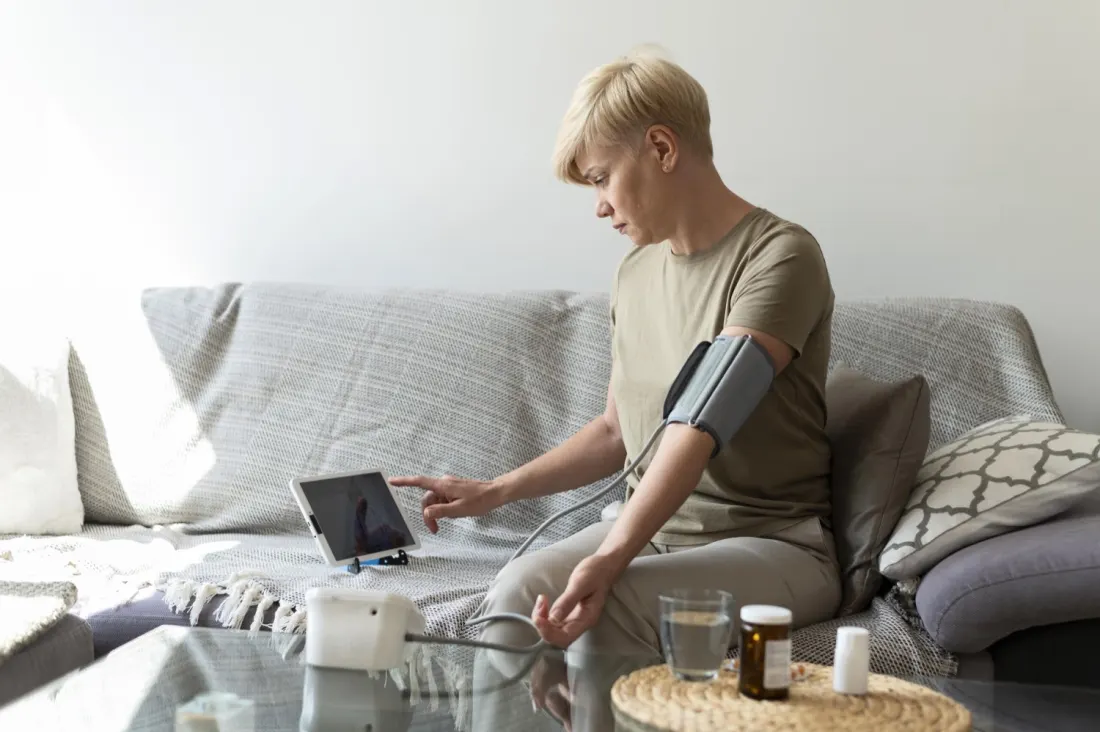
A blood pressure reading is a snapshot, not a verdict. Pressure changes during the day and with activity, so one result describes what was happening under those measurement conditions. The AHA advises repeating a higher-than-normal home reading and recording both results rather than treating a single result as a diagnosis.
For adults without known hypertension, the USPSTF describes sustained hypertension as repeatedly high measurements over time and in different settings. It recommends confirming an office-based finding with ambulatory or home monitoring using an accurate, validated device before treatment begins. Ambulatory monitoring uses a programmed device that measures periodically during normal activities and sleep. Home monitoring uses readings you take yourself.
This distinction helps explain two common patterns. With white-coat hypertension, office readings are higher than readings outside the clinic. With masked hypertension, office readings may look acceptable while out-of-office readings are higher. Either pattern is a reason to share a structured record with a clinician, not a reason to select whichever result you prefer.
A useful log includes the date, time, systolic and diastolic values, pulse if displayed, arm used, symptoms, and relevant circumstances before the measurement. Follow the schedule your clinician recommends and bring the device or its stored readings to appointments. Patterns across properly taken measurements are more informative than repeatedly checking within minutes because one number caused anxiety.
- Record both numbers rather than only the higher-looking one.
- Include timing, symptoms, arm used, and measurement circumstances.
- Use a clinician-recommended schedule instead of checking compulsively.
How to get a cleaner home reading
Start with an automatic, validated monitor that uses an upper-arm cuff. The AHA recommends this style over wrist and finger monitors for routine home use and emphasizes matching the cuff to your upper-arm size. A cuff that does not fit can produce an inaccurate result. Ask a clinician or pharmacist for help selecting a device, and take it to an appointment so its readings and your technique can be checked.
Prepare before pressing start. For at least 30 minutes beforehand, avoid smoking, caffeine, and exercise; empty your bladder. Sit quietly for at least five minutes. Use a chair that supports your back, keep both feet flat, leave your legs uncrossed, and rest your arm on a surface so the cuff is at heart level. Place the cuff on bare skin, not over clothing. Stay still and do not talk while the monitor runs. CDC and AHA instructions agree on these core steps.
Take two readings one minute apart and record both, unless your clinician has provided a different plan. Measuring at roughly the same times can make results easier to compare. Avoid repeatedly retesting to chase a preferred number.
Good technique does not guarantee that every reading will be identical; blood pressure naturally varies. The goal is to remove avoidable measurement error so the pattern is useful. Home monitoring can support care, but it does not replace regular visits or authorize changing prescribed medication on your own.
- Rest quietly for at least five minutes.
- Keep your back supported, feet flat, and arm at heart level.
- Place a correctly sized cuff on bare skin.
- Take two readings one minute apart.
What can temporarily change a reading
When a result surprises you, check the context before deciding what it means. Recent caffeine, smoking, alcohol, exercise, eating, a full bladder, talking, unsupported posture, crossed legs, an arm below heart level, clothing beneath the cuff, or an incorrect cuff size can distort a measurement. Nervousness in a clinical setting can also raise a reading. CDC explains that technique errors can make blood pressure appear either higher or lower than it really is.
Use a simple reset: stop talking, correct your position, make sure the cuff is on bare skin and fits, and rest quietly. If the result is higher than normal but not in the severe range, follow the monitor instructions or your clinician’s plan for a repeat measurement and write down both values. Do not erase the first result; its circumstances may help explain the difference.
Symptoms add context but do not identify the cause. High blood pressure often has no warning symptoms, so feeling fine does not prove that a repeated high pattern is harmless. Likewise, dizziness or weakness does not automatically mean your pressure is low.
If you use a GLP-1 medication, record symptoms alongside blood pressure and tell the clinician managing your treatment about concerning changes. For example, the current FDA Wegovy prescribing information reports hypotension-related reactions in some adults. Some were associated with gastrointestinal effects and fluid loss, particularly among people also using blood pressure medication. That evidence is specific to the labeled product and is not a reason to diagnose yourself or alter medication without clinical guidance.
- Correct obvious technique problems before repeating a routine reading.
- Record symptoms without assuming blood pressure caused them.
- Discuss concerning changes with the clinician managing your medications.
When a reading needs urgent attention
A very high reading needs a different response from an ordinary outlier. If systolic pressure is higher than 180 or diastolic pressure is higher than 120, the AHA says to wait at least one minute and measure again. If the repeat is still that high and you have chest pain, shortness of breath, back pain, numbness, weakness, a change in vision, difficulty speaking, or another new concerning symptom, call 911. Do not wait to see whether it falls on its own. AHA emergency guidance
If the repeat remains above 180 and/or 120 but you do not have those symptoms, contact a health care professional immediately. The 2025 AHA/ACC guideline describes severe hypertension without evidence of acute organ damage as requiring timely clinical evaluation and treatment. A professional must determine whether organ injury is present; home numbers alone cannot make that distinction.
For readings below that emergency threshold, urgency still depends on the pattern, symptoms, pregnancy status, and medical history. Repeated Stage 1 or Stage 2 readings deserve clinical follow-up even when you feel well. Bring your log and monitor so your care team can assess technique, confirm the pattern, and discuss an individualized plan.
Do not stop, start, or change prescribed blood pressure or GLP-1 medication because of one home reading unless the clinician managing it directs you. The practical takeaway is straightforward: identify both numbers, measure under reliable conditions, look for a pattern, and match your next step to the numbers and any symptoms.
- Above 180 systolic or 120 diastolic: wait at least one minute and recheck.
- Still that high with concerning symptoms: call 911.
- Still that high without symptoms: contact a health professional immediately.
Common questions
Can only one of my blood pressure numbers be high?
Yes. The adult category follows whichever number is in the higher category. For example, 145/76 is Stage 2 because the systolic value is at least 140, while 125/85 is Stage 1 because the diastolic value is 80–89. Both numbers matter under the 2025 AHA/ACC categories.
Is exactly 120/80 considered normal?
Not under current ACC/AHA categories. Normal requires both numbers to be below 120 and below 80. At exactly 120/80, the systolic value is elevated, but the diastolic value of 80 places the reading in Stage 1. One reading still does not establish a diagnosis.
Is systolic pressure more important than diastolic pressure?
Both matter. The AHA notes that systolic pressure provides especially useful cardiovascular-risk information in people older than 50, but either an elevated systolic or elevated diastolic value can help identify hypertension. Clinicians interpret both numbers as part of a repeated pattern.
This content is for general education only and is not medical advice, diagnosis, or treatment guidance. Consult a licensed health professional about your readings, symptoms, medications, and individual blood pressure target.