
What NEAT actually means
NEAT stands for non-exercise activity thermogenesis. In plain English, it is the energy your body uses for movement that is not sleeping, eating, or sports-like exercise. Walking from your car to a store, standing while you talk on the phone, carrying groceries, cleaning, gardening, moving around at work, and fidgeting can all contribute. NEAT names the energy cost of those actions; it is not a special workout or a single type of movement.
Your total daily energy expenditure has several parts. Your body uses energy at rest to keep basic systems running, uses energy to process food, and uses energy for physical activity. Activity-related expenditure includes planned exercise and non-exercise movement. The boundaries are practical rather than perfect. A purposeful brisk walk may count as aerobic exercise, while an easy walk between errands may fit NEAT. You do not need to label every minute correctly for the concept to help.
The useful lesson is that your activity pattern is built across the whole day. A gym session can be valuable, but it does not describe what happens during all your other waking hours. NEAT draws attention to ordinary opportunities to move that can otherwise disappear from a desk-based or highly automated routine.
- Look beyond planned workouts when assessing your activity pattern.
- Count ordinary movement without turning every action into exercise.
NEAT contributes to the energy your body uses, so it can be relevant to weight management.
Why everyday movement varies so much
NEAT is easy to overlook because small movements rarely feel like training. Yet they happen across work, transportation, errands, caregiving, and home life. Your occupation, environment, mobility, schedule, and habits all shape how much non-exercise movement fits into a normal day. That is one reason two people with similar workout plans may still have very different overall activity patterns.
This variation also explains why precise online calorie claims are unreliable. The energy cost of standing, walking, or doing chores changes with body size and composition, pace, duration, efficiency, and the task itself. NEAT also varies within the same person from one day to another. A busy shift, travel day, illness, or low-energy afternoon can change the amount of movement without any formal decision to exercise more or less.
Think of NEAT as a flexible category, not a metabolic hack. Standing for a few minutes does not guarantee a meaningful amount of weight loss, and pacing is not automatically better than a well-designed workout. The practical advantage is lower friction: many everyday actions need no equipment, membership, change of clothes, or separate hour on your calendar. Repeated often, they can make your day less sedentary and your routine more active without requiring every movement to become a fitness project.
- Expect your movement to change with your schedule and environment.
- Avoid fixed calorie promises for standing, chores, or casual walking.
Where NEAT fits in physical activity guidance
Federal guidance gives NEAT an important but limited place. The first message for adults is to move more and sit less, and some physical activity is better than none. However, the guidance does not set a universal daily sitting limit or a universal step target. It also makes clear that light everyday movement is not a substitute for all planned activity.
For substantial health benefits, adults should aim for 150 to 300 minutes of moderate-intensity aerobic activity each week, 75 to 150 minutes of vigorous-intensity activity, or an equivalent combination. Adults should also do muscle-strengthening activity involving all major muscle groups on at least two days each week. At moderate intensity, you can generally talk but not sing; at vigorous intensity, saying more than a few words without pausing for breath is difficult. Your personal effort level depends partly on fitness.
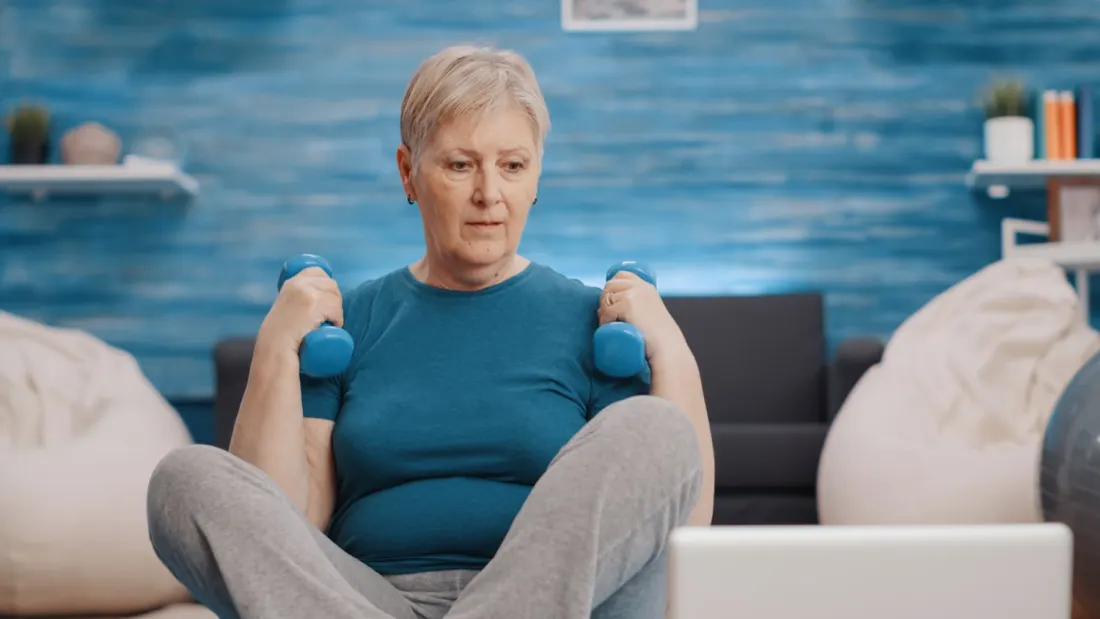
NEAT supports the “move more” part by helping you replace some sitting with movement. Planned aerobic activity develops cardiorespiratory endurance, while strength work challenges muscle in a way that casual standing or household steps may not. Regular physical activity is associated with benefits for sleep, brain health, blood pressure, physical function, and risk of several chronic diseases. The strongest plan uses everyday movement, aerobic activity, and muscle strengthening as complementary tools rather than asking one category to do every job.
- Use NEAT alongside aerobic and muscle-strengthening activity.
- Treat federal activity targets as weekly guidance, not a required daily schedule.
What NEAT can—and cannot—do for weight management
NEAT contributes to the energy your body uses, so it can be relevant to weight management. It is not a secret switch for fat loss. Body-weight change reflects energy intake and expenditure over time, and the amount of activity needed to maintain weight varies widely among people. CDC guidance pairs regular physical activity with a sustainable eating pattern rather than presenting movement as a stand-alone guarantee.
Avoid translating every standing break or chore into a promised calorie deficit. Consumer wearables can help you notice trends in steps or active time, but systematic reviews find that estimates of energy expenditure vary in accuracy. A displayed calorie number is an estimate, not a direct measurement of your metabolism. Using that number to “earn” food or compensate for eating can turn a useful cue into an unhelpful accounting system.
A better role for tracking is behavioral. One measure—such as steps, the number of movement breaks, or minutes spent walking—can show whether your routine is becoming more active. Compare it with your own baseline under similar conditions, not with a stranger’s target. A short-term change on the scale also cannot tell you how much NEAT contributed. Judge a NEAT habit first by whether it is repeatable, comfortable, and helping you spend less of the day inactive; discuss weight goals and progress with a qualified clinician when medical care is involved.
- Use trackers to observe patterns, not to calculate exact calorie compensation.
- Compare your routine with your own baseline rather than a universal target.
A practical way to build more movement into your day
Start by observing several ordinary days without trying to perform for the tracker. Notice when you sit for long stretches, which errands already involve walking, and when pain, fatigue, weather, caregiving, or work rules limit your options. Choose one baseline measure. A step count may be convenient; a paper tally of movement breaks may be better if you want to focus on a specific routine rather than a device total.
Next, attach one small action to an event that already happens. Walk briefly after lunch, stand and move after a meeting, take the stairs when safe and appropriate, make an extra trip while putting away laundry, or do a household task before evening screen time. The action should be easy enough to repeat on a busy day and adaptable enough for your mobility.
Run the change as a two-week CravingWise experiment. Two weeks is a practical review window, not a medical threshold. Look at consistency, comfort, and fit: Did the cue reliably remind you? Did the action cause pain or disrupt work? Did you keep doing it when the day became crowded? Then adjust one variable—frequency, duration, route, or cue—rather than overhauling everything at once.
Build gradually. There is no need to chase a universal step count or maximize calorie burn. A useful NEAT routine survives travel, low-energy days, and schedule changes because it has a smaller fallback version. If circumstances change, return to observation and choose a new anchor instead of treating the interruption as failure.
- Observe, choose one anchor, test it, and adjust one variable.
- Keep a smaller fallback version for unusually busy or low-energy days.
GLP-1 medications, physical function, and safety
If you use a GLP-1 medication for weight management, NEAT can remain a practical layer of your routine, but it needs to sit inside a broader care plan. A 2025 joint clinical advisory recommends combining GLP-1 treatment with individualized nutrition and lifestyle support, including assessment of aerobic activity, strength training, sleep, and medical conditions. It also highlights gastrointestinal side effects and the need to protect nutritional adequacy and physical function.
Appetite changes, nausea, vomiting, diarrhea, or fatigue may alter how you tolerate activity; the exact risks differ by drug and by person. Do not respond by forcing more movement, changing a dose, or using activity to offset food. Contact the prescribing clinician if side effects are persistent, limit eating or drinking, or interfere with normal function. Everyday walking and chores also do not replace strength training, which has a distinct role in maintaining strength and function during weight loss.
Most people can safely begin with light or moderate activity, but medical context matters. Ask a licensed clinician how to adapt activity if you have heart disease, diabetes, arthritis, balance problems, mobility limits, a recent procedure, or instructions that restrict exertion. Stop activity and seek prompt medical advice for chest discomfort, lightheadedness, confusion, an unusually fast or irregular heartbeat, extreme fatigue, or unusual or severe shortness of breath. Call 911 for possible heart-attack symptoms such as chest pressure or pain that lasts more than a few minutes, especially with shortness of breath, sweating, nausea, or lightheadedness.
- Keep medication decisions with the prescribing clinician.
- Pair everyday movement with appropriate nutrition, aerobic activity, strength work, sleep, and recovery.
Common questions
Does standing count as NEAT?
Standing generally fits the non-exercise category, and shifting position or walking adds more movement. That does not mean a standing desk produces a predictable calorie deficit or replaces exercise. Use standing as one option for breaking up a routine when it is comfortable, practical, and safe for you.
How many steps should I get for weight loss?
There is no universal federal step target for weight loss or health. Start by observing your usual step count across several representative days, then test a modest increase that fits your health, mobility, and schedule. Steps are only one measure and do not capture every useful activity.
Can NEAT replace cardio or strength training?
No. NEAT can reduce inactivity and make your overall day more active, but aerobic and muscle-strengthening activities provide distinct challenges and benefits. Current U.S. guidance calls for both weekly aerobic activity and muscle strengthening while also encouraging adults to move more and sit less.
This content is for general education and is not medical advice, diagnosis, or treatment. Consult a licensed clinician before making major activity, nutrition, or medication changes, especially if you have symptoms, medical restrictions, or a chronic condition.