
Blood pressure chart explained for real-life decisions
A blood pressure reading has two numbers, measured in millimeters of mercury (mm Hg). The category is determined by whichever number places the reading in the higher range. Use the chart to interpret an adult reading, then look at repeated, properly taken measurements rather than treating one result as a diagnosis.
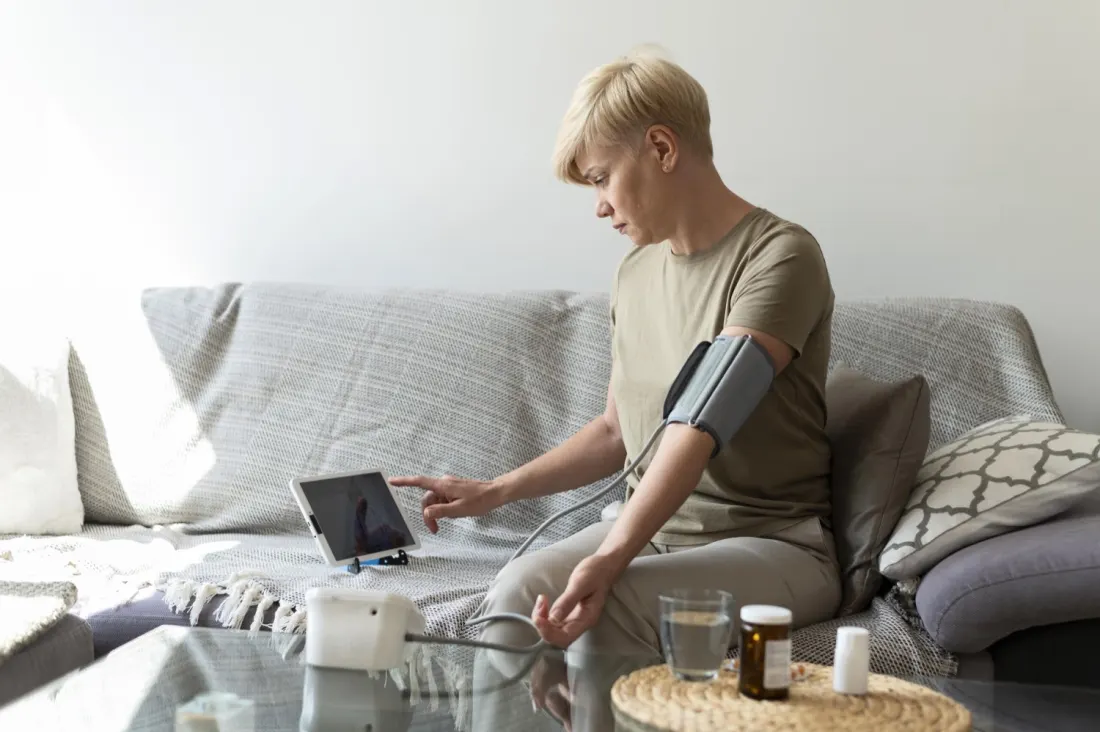
Adult blood pressure categories
| Category | Systolic (mm Hg) | and/or | Diastolic (mm Hg) | What to do |
|---|---|---|---|---|
| Normal | <120 | and | <80 | Continue routine checks. |
| Elevated | 120–129 | and | <80 | Recheck and discuss prevention with a clinician. |
| Stage 1 hypertension | 130–139 | or | 80–89 | Confirm with repeated readings and arrange clinical follow-up. |
| Stage 2 hypertension | ≥140 | or | ≥90 | Contact a clinician promptly for assessment. |
| Hypertensive crisis | >180 | and/or | >120 | Repeat after 1 minute and seek urgent care; call 911 if symptoms are present. |
What the two numbers mean
The systolic pressure is the first or top number. It measures the pressure in the arteries when the heart beats and pumps blood. The diastolic pressure is the second or bottom number. It measures arterial pressure while the heart rests between beats. A result written as 134/76 therefore means a systolic pressure of 134 and a diastolic pressure of 76 mm Hg.
The words “and” and “or” in the chart matter. Normal requires both numbers to be below their cutoffs. Elevated requires a systolic result of 120–129 and a diastolic result below 80. For Stage 1 and Stage 2 hypertension, either number can place the reading in that category. A reading of 128/84 is Stage 1, not elevated, because the diastolic number is 84. A reading of 142/78 is Stage 2 because the systolic number is at least 140.
These categories apply to adults. Blood pressure assessment during pregnancy and interpretation for children require separate clinical standards. A licensed clinician can also account for health history, medications and cardiovascular risk when deciding what a pattern of readings means.
Why one reading is not a diagnosis
A blood pressure measurement is a snapshot of one moment. MedlinePlus states that clinicians usually diagnose high blood pressure only after two or more high readings on different days. The ACC/AHA guideline likewise bases classification on an average of at least two careful readings obtained on at least two occasions. Home readings can help confirm what is happening outside a medical office.
Technique can shift the result. Recent exercise, caffeine, alcohol or smoking may raise a reading. A full bladder, talking, crossed legs, an unsupported back or an arm hanging below heart level can also interfere with accuracy. The cuff must touch bare skin and fit the arm correctly; the American Heart Association warns that an incorrectly sized cuff produces inaccurate results.
The setting matters as well. Some people have higher readings in a medical office because they feel nervous, a pattern called the white-coat effect or white-coat syndrome. CDC reports that as many as one in three people with a high office reading may have normal readings outside the office. This is one reason clinicians compare repeated office or home measurements instead of labeling a person from a single number.
How to take a useful home reading
Use an automatic upper-arm monitor with a cuff that matches your measured upper-arm circumference. Ask a health professional to compare the device with office equipment and confirm that the cuff fits. The American Heart Association recommends bringing a home monitor in periodically so its accuracy can be checked.
Prepare the same way each time. Take measurements at roughly the same time each day when a clinician has asked you to monitor. CDC recommends at least two readings, one or two minutes apart. A Million Hearts clinical protocol uses two or three readings one minute apart in the morning and evening, preferably for seven days and for at least three days, but the schedule should match the clinician’s purpose for the log.
- Avoid smoking, caffeine and exercise for at least 30 minutes beforehand.
- Empty your bladder, then sit quietly for at least five minutes.
- Sit with your back supported, feet flat and legs uncrossed.
- Place the cuff on bare skin and support the arm at heart level.
- Stay still and do not talk or use the phone during the measurement.
- Take the requested repeat reading instead of recording only the first result.
Build a log a clinician can use
Record every requested reading rather than keeping only the lowest number. A useful entry includes the date, time, systolic and diastolic results, which arm was used and whether the readings were the first or second measurement in the set. If the monitor reports pulse, record that value separately so it is not confused with blood pressure.
Add short context when something differed from the usual routine: recent exercise, caffeine, smoking, missed rest time, illness, pain or an improperly positioned cuff. Record medication names and timing if the clinician specifically asks for that information. Do not change or stop a blood pressure medicine because of a home result; the American Heart Association directs patients to consult their health professional first.
Bring the log and the monitor to an appointment. A series of readings taken with consistent technique gives the clinician a more complete picture than one isolated measurement and may help reveal differences between home and office results.
When a high number cannot wait
A single result above your usual range is not automatically an emergency. Sit quietly, check your position and repeat the measurement. Contact a clinician about readings that remain consistently high, a new pattern of Stage 2 results or a large unexplained change from your usual measurements. The urgency depends on the numbers, symptoms, pregnancy status and medical history.
A reading higher than 180 systolic and/or higher than 120 diastolic needs immediate attention. Wait at least one minute and measure again. If the second result remains that high and there are no new concerning symptoms, contact a health professional immediately for same-day guidance. The American Heart Association describes this as severe hypertension and says it should be evaluated promptly.
Call 911 when a reading above 180/120 occurs with chest pain, shortness of breath, back pain, numbness, weakness, a change in vision, difficulty speaking or another new concerning symptom. Do not wait for the pressure to fall on its own. Make medication and other health decisions with a licensed clinician.
How to read the two numbers
Blood pressure is written as systolic over diastolic. The systolic number is the pressure when the heart beats. The diastolic number is the pressure when the heart rests between beats. The number can change with cuff size, body position, stress, caffeine, exercise, pain, illness and timing. That is why a useful home log includes the reading, time, arm, symptoms and whether the reading was repeated after sitting quietly.
- Use a cuff size that fits your arm and follow the instructions for your monitor.
- Write down both numbers instead of rounding from memory.
- Do not make medication decisions from one unusual reading.
Common adult blood pressure categories
The American Heart Association organizes adult readings into categories. Normal is below 120 systolic and below 80 diastolic. Elevated is 120-129 systolic and below 80 diastolic. Stage 1 hypertension is 130-139 systolic or 80-89 diastolic. Stage 2 hypertension is 140 or higher systolic or 90 or higher diastolic. A very high reading needs extra caution, especially when symptoms are present.
- Normal: below 120 and below 80.
- Elevated: 120-129 and below 80.
- Stage 1 or stage 2 hypertension: repeated readings should be reviewed with a clinician.
What to do with a high reading
If a reading is higher than expected, pause before reacting. Recheck using the same method your clinician recommends, make a note of symptoms and review your recent context: caffeine, exercise, stress, pain, medication timing, sleep and sodium-heavy meals can all affect a reading. If readings stay high, the next step is clinical guidance, not an internet hack.
- Keep a short log instead of relying on memory.
- Ask your clinician how often to measure if you are changing weight, medication or routine.
- Seek urgent care guidance for severe readings with concerning symptoms.
Why this matters for GLP-1 and weight-loss readers
CravingWise readers often compare GLP-1 care, weight-loss programs and blood-pressure-friendly nutrition at the same time. Weight change, appetite change, vomiting, diarrhea, hydration changes and medication adjustments can all matter for blood pressure care. A chart can help you label a reading, but your clinician should decide how readings affect treatment, especially if you already take blood-pressure, diabetes or heart medications.
- Track dizziness, fainting, dehydration symptoms or major appetite changes.
- Do not stop blood-pressure medication because weight is changing.
- Bring your readings to the provider managing your blood pressure.
Use the chart as a decision filter
The best use of a chart is to slow the decision down. Is this one reading or a pattern? Was it measured correctly? Are there symptoms? Are you starting a new medication or changing diet, hydration or activity? Those questions are more useful than guessing from a single number. For next steps, pair this page with the lowering blood pressure guide and any instructions from your care team.
- Pattern beats panic: repeated, correctly measured readings are more useful.
- Symptoms change the urgency of the situation.
- Your personal target may differ from a generic chart.
Source check
Read the claim through the source first
Before acting on this topic, confirm what the official source says, what is still unknown and what belongs with a licensed clinician.
- Official source
- Date checked
- Clinical question
Common questions
Which category applies if only one number is high?
Use the higher category. For example, 126/82 falls in Stage 1 because a diastolic value of 80–89 qualifies even though the systolic value is below 130.
Should I discard the first home reading if the second is lower?
No. Record both readings in order unless a clinician gave different instructions. CDC recommends taking at least two readings one or two minutes apart, and a complete record shows the variation rather than selecting the preferred result.
Why does my home result differ from the reading at a medical office?
Nervousness can raise an office measurement, while cuff fit, body position, recent caffeine, exercise and timing can affect either result. Use consistent technique and show both sets of readings to a clinician instead of deciding that one device or setting is correct.
How many days should I track my blood pressure?
Follow the schedule given for your clinical situation. A Million Hearts protocol describes morning and evening sets for preferably seven days and at least three days when clinicians need an accurate home picture, but long-term monitoring frequency should be individualized.
Is a wrist monitor good enough?
The American Heart Association recommends an automatic upper-arm cuff-style monitor for home use. If an upper-arm device cannot be used, ask a clinician which alternative is appropriate and how to check its accuracy.
What is normal blood pressure?
The American Heart Association lists normal adult blood pressure as below 120 systolic and below 80 diastolic. Your clinician may give you a different personal target based on your health history.
Is one high reading enough to diagnose hypertension?
No. One reading can be affected by technique, stress, caffeine, activity, illness or timing. Repeated readings and clinical context are needed.
When is a blood pressure reading urgent?
A very high reading with symptoms such as chest pain, shortness of breath, weakness, confusion or vision changes needs urgent medical guidance. Follow emergency instructions from qualified medical sources and your clinician.
Educational content only. This guide is not medical advice, diagnosis, treatment guidance or a substitute for a licensed clinician. Do not start, stop or change medication based on this page.