
What DASH is—and what it is not
DASH stands for Dietary Approaches to Stop Hypertension. The National Heart, Lung, and Blood Institute describes it as a flexible, balanced eating plan built around vegetables, fruits, whole grains, fat-free or low-fat dairy, fish, poultry, beans, nuts, seeds, and vegetable oils. It limits foods high in saturated fat, sugar-sweetened drinks, sweets, and excess sodium. You do not need a branded product, supplement, shake, or separate menu for the rest of your household.
The pattern was developed with blood pressure in mind. NHLBI-funded feeding trials found that DASH lowered blood pressure compared with a typical American diet, and that combining DASH with less sodium produced a larger blood-pressure effect than either change alone. That does not make DASH a treatment substitute. Blood pressure care can also involve monitoring, physical activity, sleep, medication, and attention to other health conditions.
DASH is not automatically vegetarian, low-carbohydrate, dairy-free, or a weight-loss diet. It can be adapted to different preferences, but its standard structure includes grains and optional animal foods. Weight may change if your total calorie intake changes; simply using the DASH name does not guarantee weight loss. The most useful way to understand it is as an overall pattern: more minimally processed plant foods, appropriate portions of protein and dairy or suitable alternatives, and fewer foods that concentrate sodium, saturated fat, and added sugar.
- Food-first and flexible
- Designed to support heart health and lower blood pressure
- No required products, supplements, or specialty foods
You can make a meal more DASH-aligned without replacing every ingredient.
Use the serving guide as a map, not a daily test
NHLBI gives serving ranges at several calorie levels because one fixed menu cannot fit everyone. In the 2,000-calorie example, the daily pattern includes 6–8 grain servings, 4–5 vegetable servings, 4–5 fruit servings, 2–3 servings of fat-free or low-fat dairy, 6 or fewer one-ounce servings of lean meat, poultry, or fish, and 2–3 servings of fats and oils. It also includes 4–5 weekly servings of nuts, seeds, and legumes and no more than 5 weekly servings of sweets and added sugars.
Those numbers sound larger until you see what “serving” means. One grain serving can be one slice of bread or one-half cup of cooked rice, pasta, or cereal. A vegetable serving can be one cup of raw leafy vegetables or one-half cup of cut raw or cooked vegetables. One medium fruit or one-half cup of fruit counts as a fruit serving. One cup of milk or yogurt counts as dairy. The meat, poultry, and fish line uses one-ounce servings, so it is not calling for six full entrées.
You do not have to count every serving forever. Use the guide to notice the shape of your current diet. If produce appears only at dinner, add fruit at breakfast or vegetables at lunch. If most grains are refined, make some of your usual choices whole grain. Your calorie needs and appropriate serving counts may differ, so treat the 2,000-calorie pattern as an example rather than a personal prescription.
- Produce has a substantial role across the day
- Most grain choices are intended to be whole grain
- Beans, lentils, nuts, and seeds count across the week
Sodium matters, but the salt shaker is only part of it
The standard DASH framework limits sodium to 2,300 milligrams per day; NHLBI also provides a 1,500-milligram version. The lower target is an option, not a number to adopt blindly if a clinician has given you different instructions. Sodium is not identical to salt: salt contains sodium, but sodium also appears in ingredients used for curing, baking, preserving, and flavoring.
Most dietary sodium comes from processed and restaurant foods, according to CDC. That is why breads and tortillas, deli meats, soups, pizza, mixed dishes, savory snacks, condiments, cheese, frozen meals, and takeout can matter even when food does not taste extremely salty. The practical move is comparison, not memorization. On the Nutrition Facts label, check sodium per serving, the serving size, and how many servings you actually eat. FDA’s general guide calls 5% Daily Value or less per serving low in sodium and 20% or more high.
Compare like with like: two soups, two breads, or two sauces. A product labeled “reduced sodium” may contain less than its regular version but can still contribute a meaningful amount, so the numbers remain important. Fresh and frozen foods without salty sauces are useful defaults. No-salt-added canned options can work too. The goal is not to make every bite sodium-free; it is to lower the total pattern while keeping meals satisfying enough to repeat.
- Check sodium per serving and servings eaten
- Use 5% DV as low and 20% DV as high
- Compare similar products before changing the whole meal
Build meals with four simple jobs
You can make a meal more DASH-aligned without replacing every ingredient. First, give vegetables or fruit a real job: berries in oatmeal, fruit beside breakfast, vegetables in a sandwich, a side salad, or frozen vegetables stirred into dinner. Second, include a fiber-rich carbohydrate such as oats, brown rice, whole-grain bread, whole-wheat pasta, beans, or lentils. Third, choose a protein that fits the pattern, such as beans, lentils, fish, poultry, eggs, or a modest portion of lean meat. Fourth, look at the main source of sodium and decide whether one swap would help.
Flavor does not have to disappear with salt. NHLBI suggests herbs, spices, salt-free seasoning blends, and lemon or lime juice. Vinegar, garlic, ginger, chiles, and toasted spices can also make lower-sodium meals taste intentional. Watch packaged seasoning packets, bottled sauces, dressings, broths, and condiments, because a small amount may supply much of the meal’s sodium.
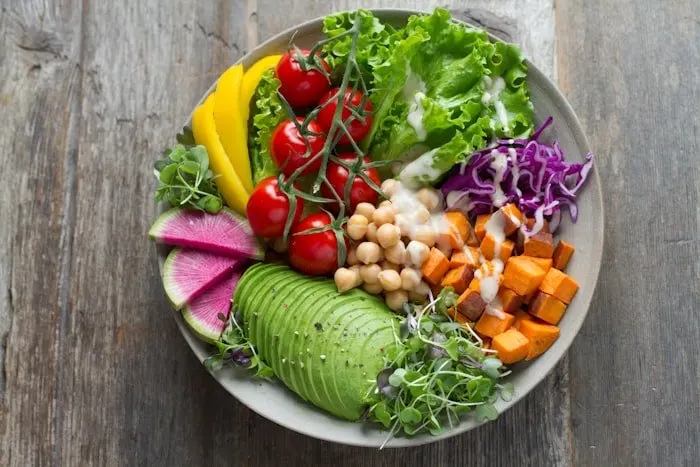
Make the plan easier by improving meals you already eat. Try lower-sodium beans in tacos, extra vegetables and less cured meat in a sandwich, plain frozen vegetables with your own seasoning, or a grain bowl with beans, produce, and an unsalted dressing base. Pick one breakfast, one lunch, and one dinner you can repeat. Consistency across ordinary meals matters more than producing a perfect “DASH meal” once and abandoning the pattern two days later.
- Ask where the produce is
- Include a fiber-rich grain or legume
- Identify the meal’s biggest sodium source
- Choose one swap you can repeat next week
Know when the pattern needs personalization
DASH is designed to be rich in potassium, calcium, magnesium, fiber, and protein, but “heart-healthy” does not mean identical for every medical situation. Chronic kidney disease can change how your body handles potassium, phosphorus, protein, sodium, and fluid. NIDDK advises working with a dietitian or health professional to find the right amounts. Be especially careful with salt substitutes: many replace sodium chloride with potassium chloride, which may be unsuitable for some people with kidney disease or for people taking medicines that affect potassium.
Food allergies, lactose intolerance, diabetes, digestive conditions, pregnancy, and an eating-disorder history can also change how the pattern is built. Adaptation might mean lactose-free dairy, a fortified alternative selected with professional help, different carbohydrate portions, lower-volume produce choices, or a less tracking-heavy approach. The goal is to preserve the broad pattern without ignoring your health needs.
If you use a GLP-1 medication, DASH does not replace the plan from your prescriber or registered dietitian. If nausea, constipation, vomiting, or early fullness affects what you can eat, forcing large, high-volume meals may make adherence harder. For context, the current FDA label for Wegovy, one GLP-1 medicine, lists several gastrointestinal adverse reactions and notes delayed gastric emptying. Your experience and medication may differ. Ask your care team how to meet protein, fluid, and overall nutrition needs, and contact them about persistent or concerning symptoms rather than trying to solve medication problems with diet rules alone.
- Personalize for kidney function and potassium safety
- Check salt substitutes before using them
- Coordinate GLP-1 nutrition concerns with your care team
If blood pressure is your goal, track it accurately
A DASH pattern can support blood-pressure care, but a home monitor only helps if the device and technique are dependable. The American Heart Association recommends an automatic, validated upper-arm cuff that fits your arm. ValidateBP maintains a searchable U.S. list of devices reviewed for clinical accuracy. Bring a new monitor to an appointment so your care team can check your technique and compare it with office equipment.
Before measuring, avoid smoking, caffeinated drinks, and exercise for 30 minutes, empty your bladder, and rest quietly for at least 5 minutes. Sit with your back supported, feet flat, and legs uncrossed. Put the cuff on bare skin, support your arm at heart level, and do not talk. AHA advises taking two readings one minute apart and recording the results; ask your clinician when and how often to measure. A single reading is a snapshot, while a consistent log gives your care team more useful context.
Home readings do not diagnose hypertension by themselves and do not replace regular care. Never stop or change blood-pressure medication because of a home result without speaking with your clinician. If a reading is higher than 180/120 mm Hg, wait at least one minute and repeat it. If it remains that high, contact a health professional immediately. If it is higher than 180/120 and you also have symptoms such as chest pain, shortness of breath, weakness, numbness, vision change, or trouble speaking, call 911.
- Use a validated upper-arm device with the correct cuff size
- Take two readings one minute apart
- Record results and share the pattern with your clinician
Common questions
Can you follow DASH with frozen or canned foods?
Yes. Frozen vegetables and fruit without salty sauces or added sugar can fit well. Canned beans, vegetables, fruit, fish, and soups vary widely, so compare Nutrition Facts labels, look for no-salt-added or lower-sodium options, and check the serving size. The format matters less than what has been added and how the food fits your overall pattern.
Is 1,500 milligrams of sodium better than 2,300 milligrams for everyone?
NHLBI provides both 2,300-milligram and 1,500-milligram DASH versions, and its research summary reports greater blood-pressure lowering with DASH plus the lower sodium level. That does not make 1,500 milligrams a universal personal target. Your clinician or dietitian can help account for your health conditions, medications, calorie needs, and current intake.
How quickly will DASH lower your blood pressure?
Controlled DASH studies detected blood-pressure changes within weeks, but real-life results vary with your starting blood pressure, sodium intake, consistency, medications, and other health factors. Avoid treating a short deadline or one home reading as proof that the plan worked or failed. Use accurate measurements over time and review the pattern with your clinician.
This information is for education only and is not medical advice, diagnosis, or treatment. Talk with a licensed clinician before changing medication or blood-pressure care, and before making major diet changes if you have kidney disease or another medical condition.